
After weeks of threats, the SEC and Big Ten have gotten the authors of the Protect College Sports Act to the table. It would be odd for a bill that threatened to revolutionized the carbonated beverage industry got to the floor without Coke and Pepsi having their say, and so the two most powerful conferences -- representing 34 institutions, most of them public schools from the biggest, most-populated, most-college-sports-obsessed states in the union -- have had the opportunity to have their say.
And what to the so-called Power 2 want? Primarily, the opportunity to pay their athletes more money.
According to a draft provision making the rounds on Tuesday, the Big Ten and SEC have asked for a revision to the PCSA that would allow schools to go above the rev-share "salary cap" (currently just above $20 million) to retain their current athletes. This idea is not new, it's borrowed from the NBA's collective bargaining agreement provision called "Bird Rights." Except the Big Ten/SEC want to allow schools to spend an additional $25 million on keeping their own players.
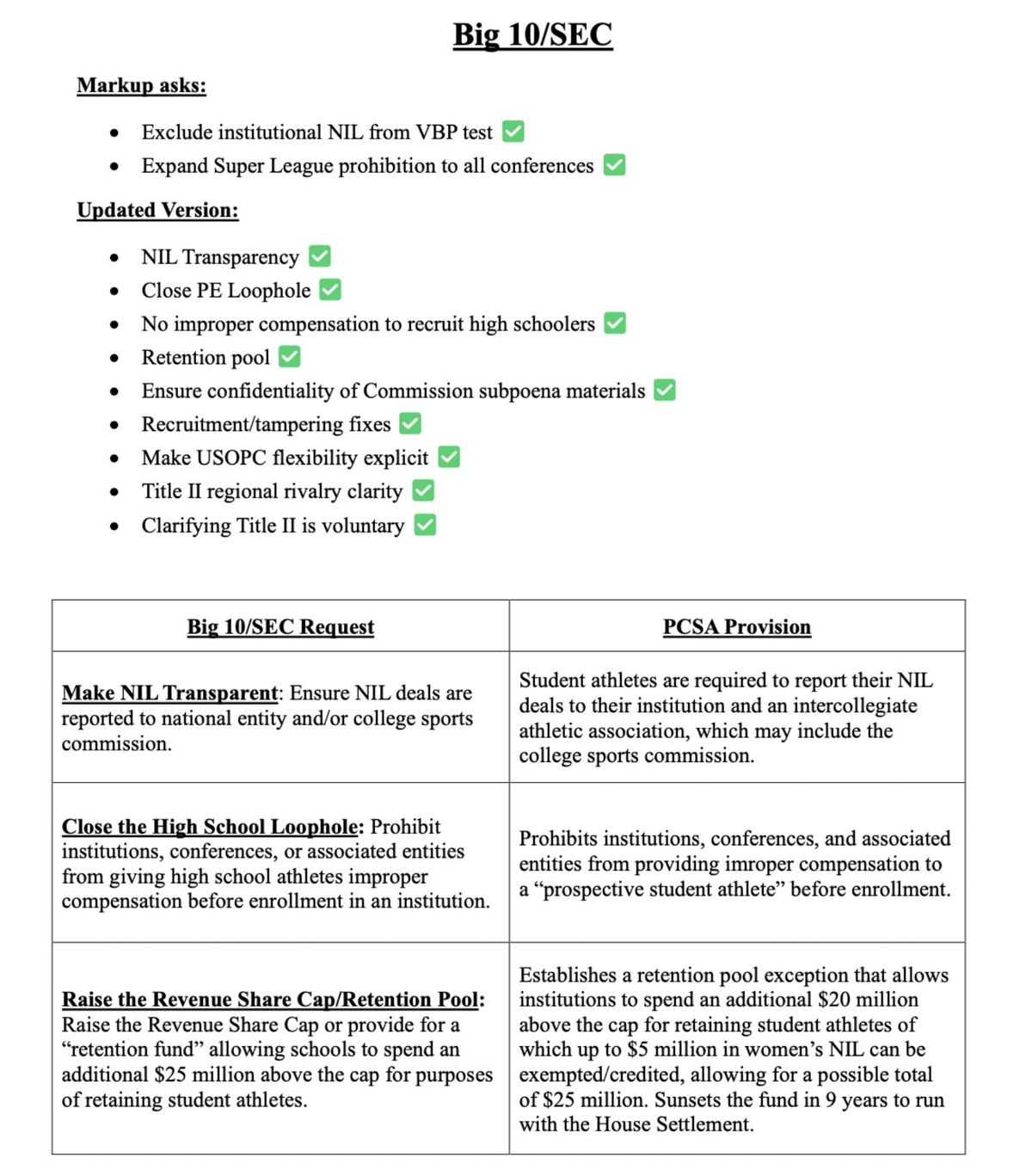
Just four years after $13 million was considered an eye-popping figure to fund a championship-caliber roster, $40 million is now considered the minimum spend for teams competing to play into late January. And now we're talking about adding up to $25 million to the system.
Keep in mind, not all $25 million would go to football. Five would be reserved for women's sports, and another chunk would go to men's basketball, baseball (for schools that care about it), and other sports. Even speaking conservatively, that's another $10 million revenue stream, plus the existing rev-share, plus collective money, plus "true" NIL via third-party endorsements.
If approved (and, it goes without saying, the PCSA gains the necessary votes to become law), this would create more heartburn for all the non-B1G/SEC schools already struggling to keep up with the Joneses. Cue more usage of the "u-word" -- unsustainable. Then again, the B1G/SEC would counter by saying it's not their job to worry about the budgets of schools in the other conferences. As stated above, the fund would sunset in nine years, so it wouldn't be forever (at least for now).
However, there's also a chance that this provision could help solve another buzzword-y problem: "guardrails." If teams are allowed to spend more on players than the competition, this would reduce the incentive for players to hop into the transfer portal. This provision would provide a market-based solution to end annual free agency, which would be more legally durable than writing a rule that lawyers would immediately challenge on antitrust grounds.
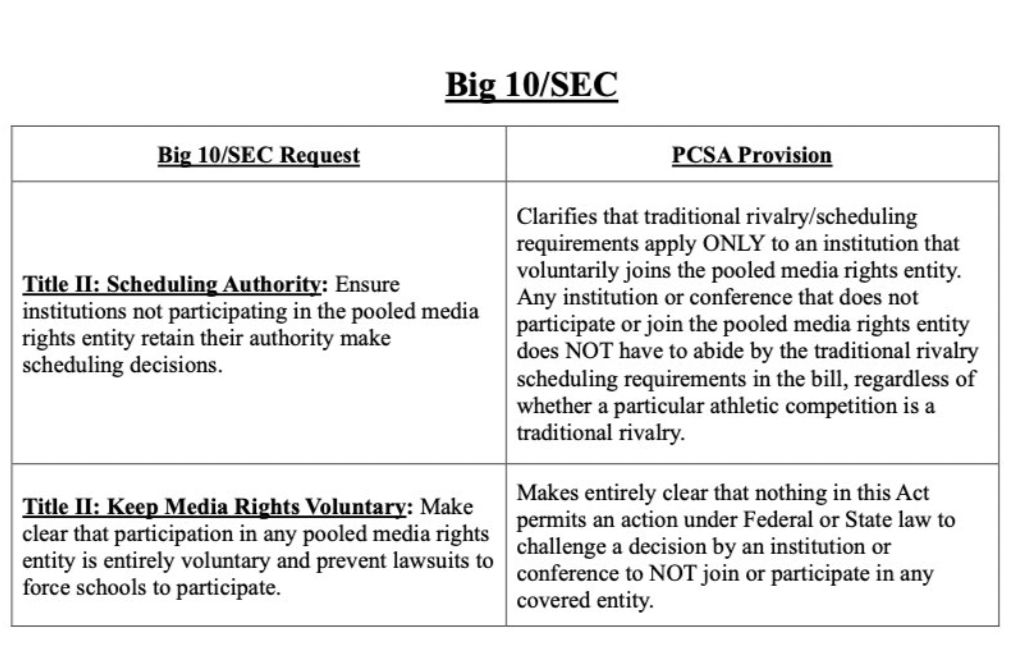
Elsewhere, the Big Ten and SEC have added requests that would limit the ACC and Big 12 from expanding, and puts into writing that any TV revenue pool sharing would be strictly voluntary. Which means the Big Ten and SEC would voluntarily decline to share their TV money with the rest of the class.
Again, none of this matters if the PCSA doesn't pass. And in a midterm election year, the clock is ticking.