
The Big Ten on Wednesday released an open letter to the NCAA calling on the organization to halt all current investigations into tampering in regards to the transfer portal until the rules can be re-written for reality as its is on the ground.
The letter argues that it's simply not realistic to expect players and teams to go from 0-to-100 the moment the clock strikes midnight on Jan. 2.
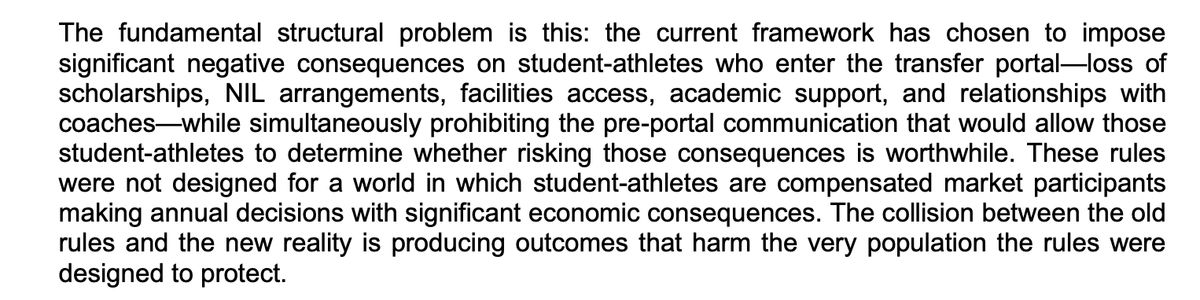
The conference then sighted as evidence that more than 1,000 players entered the portal as soon as it opened on Jan. 2, and then hundreds coincidentally had visits lined up and deals agreed upon nearly immediately.
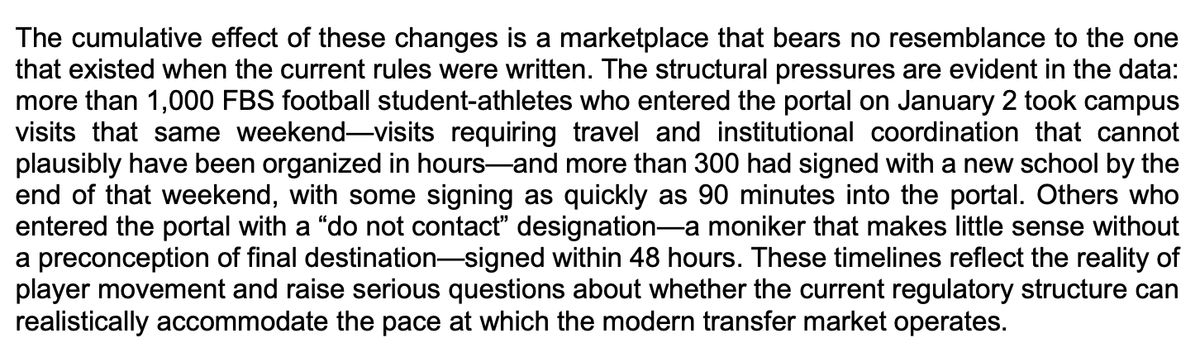
The conference then called on the NCAA and its member schools to work collaboratively on rules that reflect reality as it is, not as those in power wish it to be.
Coincidentally, the letter dropped on the same day ESPN published a lengthy look at tampering, in which agents and GMs agreed it's simply not possible to operate without tampering as the rules are currently written. From the piece:
The current transfer rules now make it seem impossible to navigate the chaotic portal process without the help of an agent and their rolodex of contacts. This year, the portal window began on Jan. 2 and was open for only two weeks. To meet enrollment deadlines, players on the move had to get official visits booked and deals negotiated as fast as possible.
For all parties, tampering has become imperative. Teams need to find out who will be available. Players need assurances they'll have somewhere to go. Agents play the role of matchmaker throughout December, if not sooner.
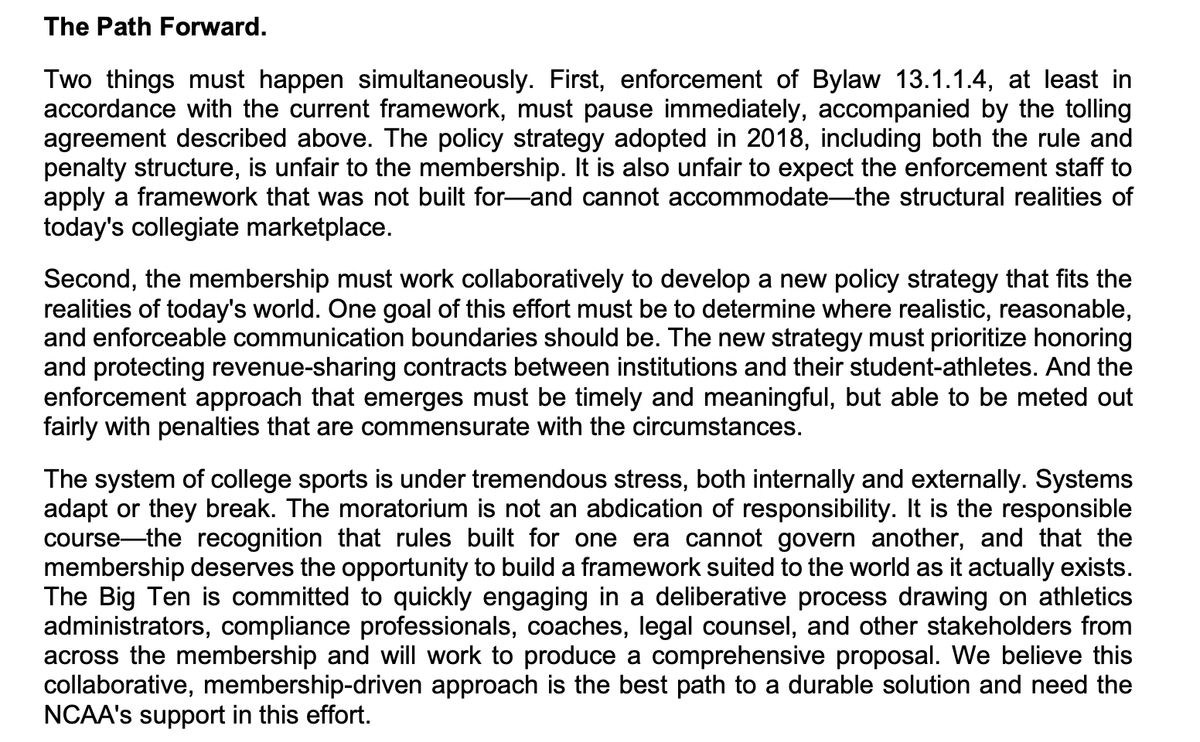
As it happens, the solution might lie within the Big Ten's own files.
After then-Wisconsin cornerback Xavier Lucas left for Miami outside of the portal window last spring after having signed a revenue-sharing agreement with the Badgers, the conference crafted language within its rev-share agreements that made them essentially iron-clad. That language was put to the test in January when LSU approached Washington quarterback Demond Williams. Williams initially entered the portal, but after Williams's agent dropped him, the quarterback acquired new representation and quickly came to the conclusion that leaving Washington would not be tenable after signing the rev-share agreement. He formally withdrew his name from the portal within hours. LSU later signed Arizona State quarterback Sam Leavitt.
Just before the portal closed, Duke quarterback Darian Mensah entered the portal and signed with Miami. Though the Blue Devils eventually settled with Mensah, their contract was not strong enough to keep him away from the Hurricanes.
So, the answer to the question of how to stop tampering may boil down to if the Big Ten decides if its rev-share contracts are a competitive advantage to be retained or a guidebook to a more equitable, less chaotic future of college sports.
Thursday evening update >> The NCAA has provided the following statement to Ross Dellenger:
“There have been no changes to tampering rules, and there is no moratorium on enforcement activity for possible tampering violations. Any changes to the infractions process – or a moratorium on enforcement of certain rules – would need to be approved by the Division I Board of Directors. The NCAA is committed to enforcing the rules as agreed to by NCAA member schools and will always work with members to ensure fair competition and to protect student-athlete well-being in this new era of college sports.”