
In the first 24-to-36 months of the NIL era, every single news story and every single quote from coaches, ADs, presidents and collective executives included the same two words: "guardrails" and "unsustainable." The guardrails part is being worked on via the Protect College Sports Act currently snaking its way through Capitol Hill, but you don't hear so much about how unsustainable this system is. Five years in, the NIL market is sustaining itself just fine.
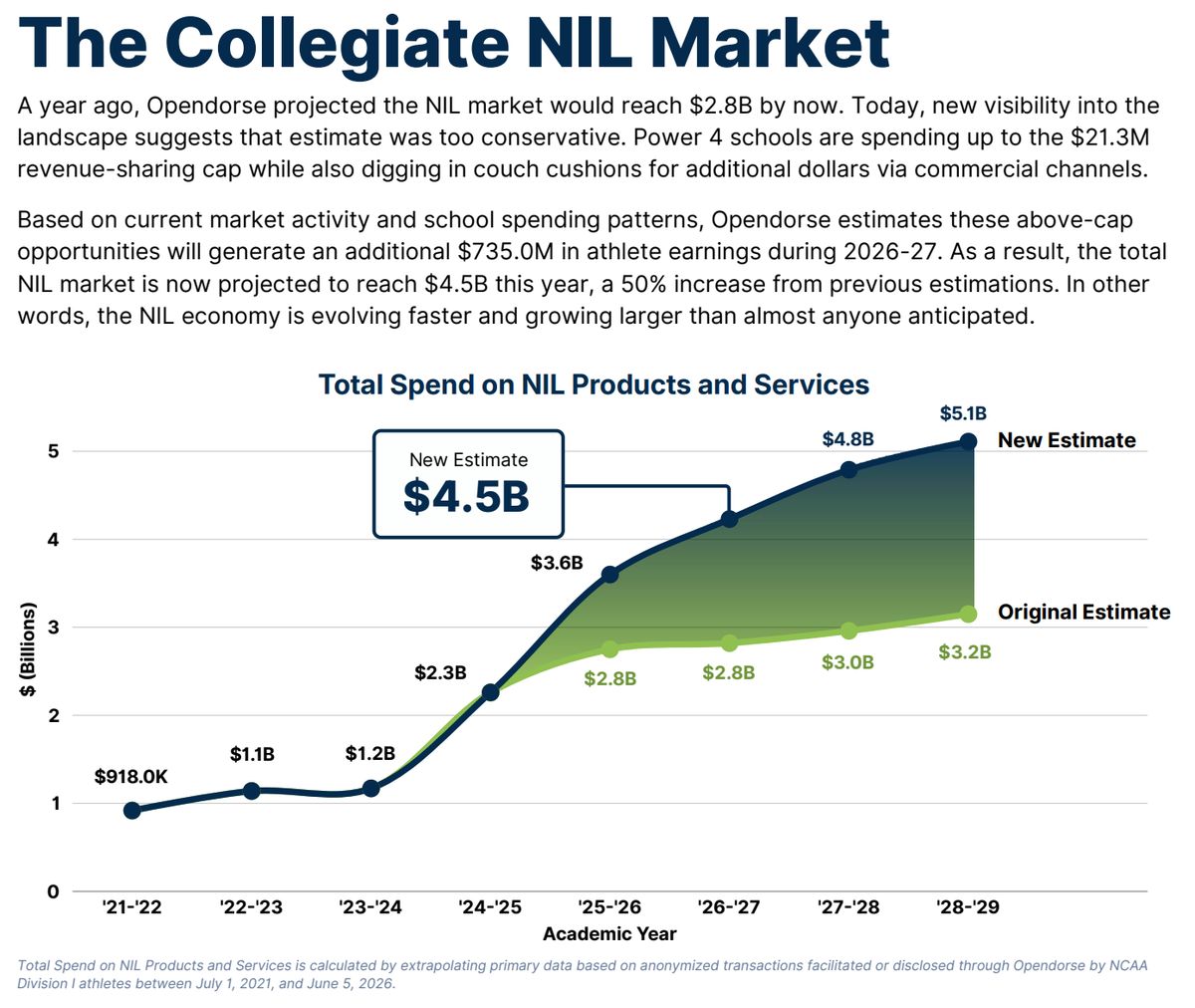
The latest, and strongest, evidence comes from Opendorse, a brand-to-athlete match-making service that's been in the endorsement space since 2012. In their latest estimate of the NIL industry, released Thursday, the firm increased its estimate of the total moneys paid to college athletes at $4.5 billion, a 50 percent increase of its previous estimate for the 2026-27 academic year. Opendorse projects the NIL economy topping $5 billion by 2028-29.
The introduction of the rev-share cap, brought about by the House settlement, brought in up to $21.3 million per school, but Opendorse also reported that Meta, the owner of Instagram, increased its spending to influences to $3 billion, a 35 percent increase.
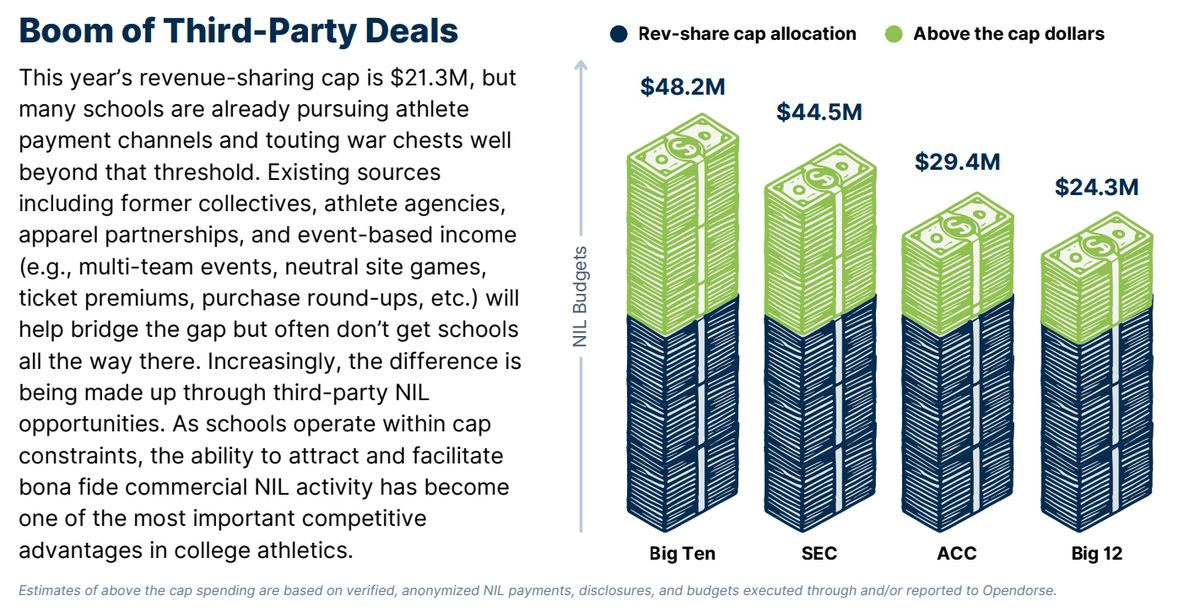
Opendorse also reported that athletes at Big Ten schools earned an average of $48 million in rev-share and third-party NIL, the most in college athletics. The SEC was not far behind at $44.5 million, with a big drop down to the ACC and Big 12. New revenue sources that didn't exist in 2021 -- think non-conference basketball tournaments paying appearance fees to athletes -- contributed to the increase, as well as schools getting better at sourcing third-party deals (i.e., "true" NIL) for their players.
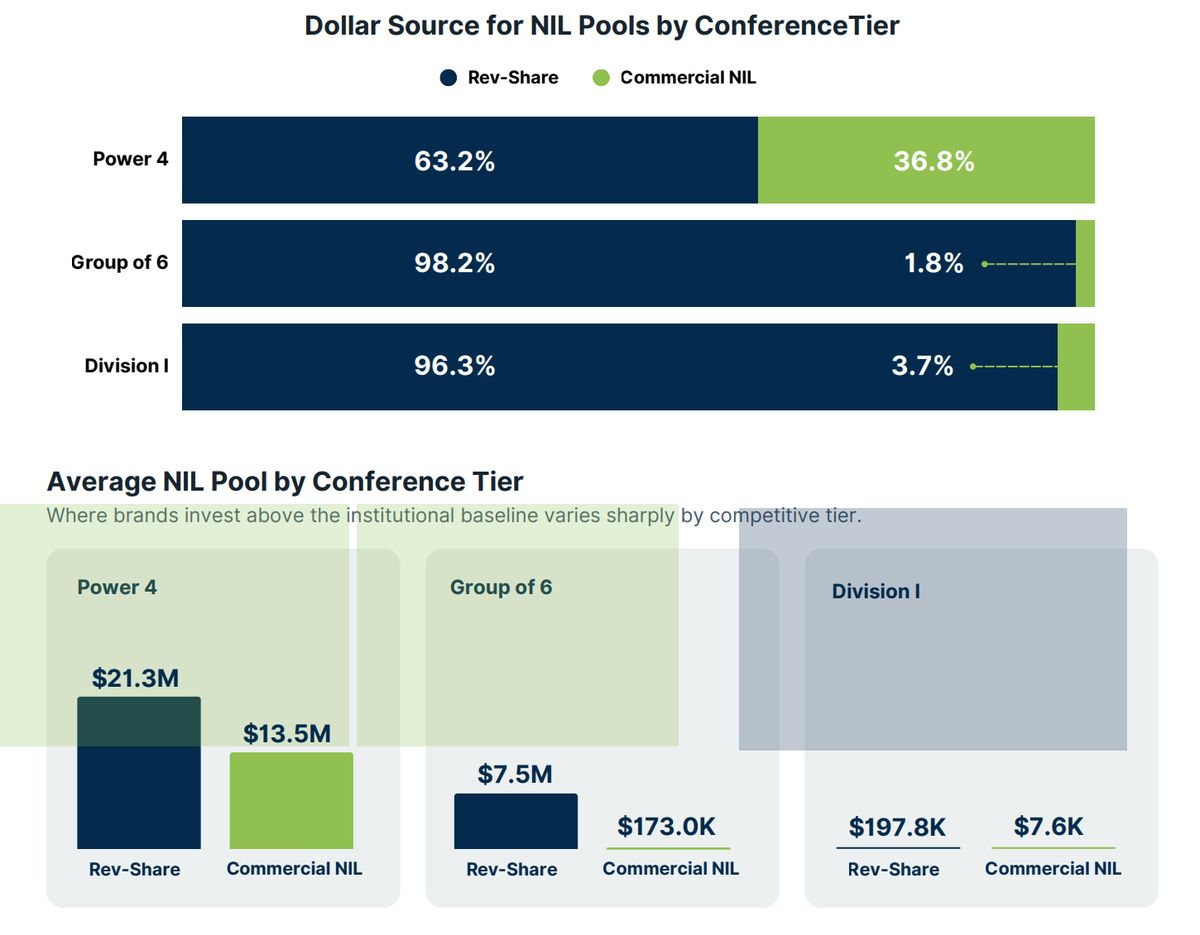
Unsurprisingly, this is mostly a Power 4 phenomenon. Nearly 37 percent of total compensation to Power 4 athletes comes outside of the rev-share structure, compared to 1.8 percent for the Group of 6. In raw dollars, Power 4 athletes average $13.5 million in "commercial NIL," compared to $173,000 in the Group of 6.
Men's basketball players average the most money per NIL deal at nearly $14,000, but a Power 4 quarterback is the highest-paid athlete in college sports, with an average salary of $1.5 million. On average, the highest-paid athlete outside of football or men's basketball is a forward for a Power 4 women's basketball team, earning $137,500 a year.
On the revenue front, Ross Dellenger reported for On3 that part of the fight around the Protect College Sports Act is whether or not include third-party deals as part of the rev-share cap, which would equate to a 9-figure pay cut for athletes across the country. Others argue the cap should be lifted to account for the "extra" money that finds its way into athletes' pockets. "Plenty of folks believe, whether the bill passes or not, the cap should be raised," Dellenger writes. "... The thing is, roster values are not falling."
Sounds pretty sustainable to me.