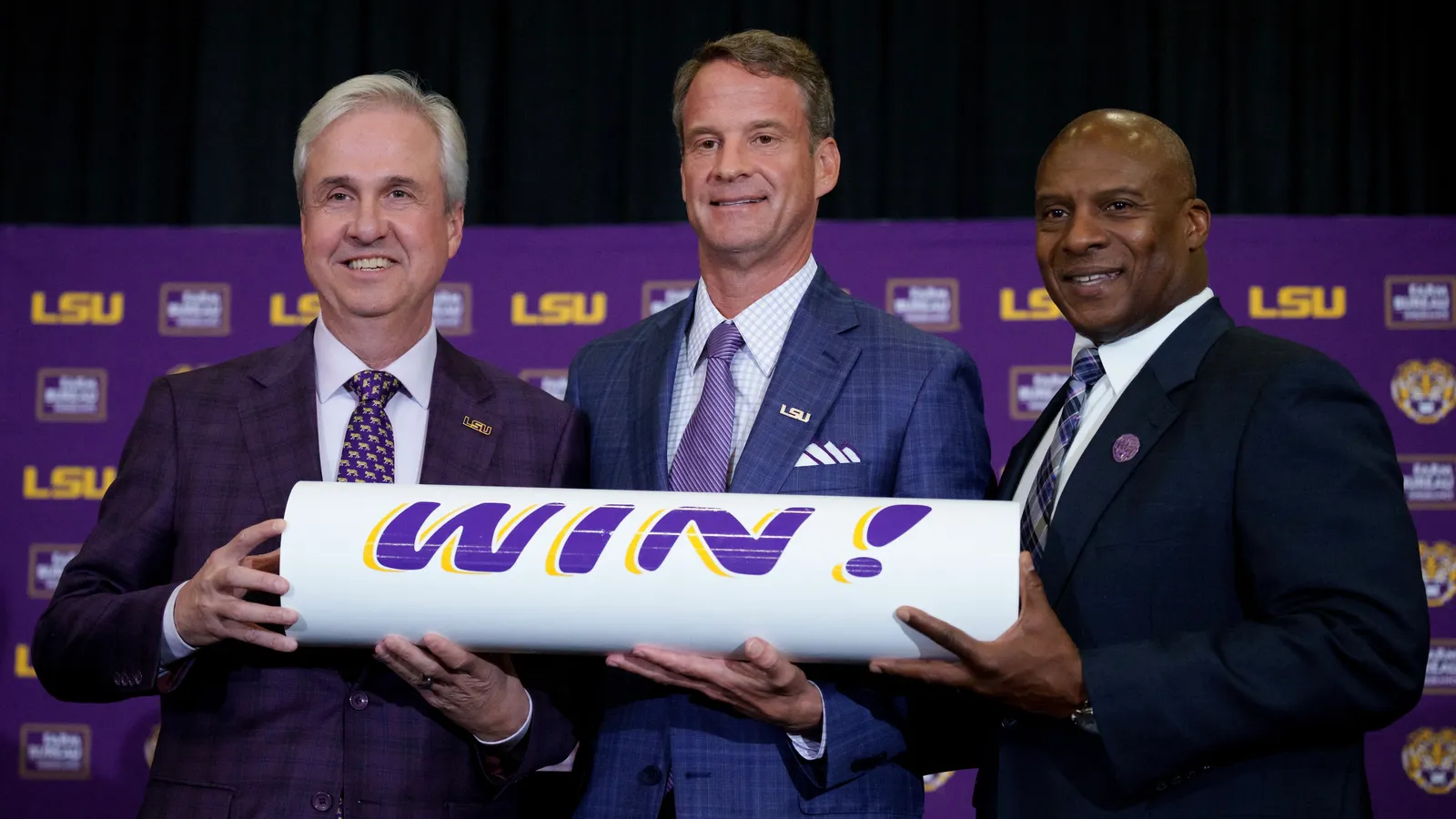
A long-awaited bill by Senators Maria Cantwell (D-WA) and Ted Cruz (R-TX) was unveiled to the media on Wednesday in advance of releasing it to the entire Senate in hopes of passage at some point in the future. Named the Protect College Sports Act, the bill attempts to build in important protections for schools, athletes and conferences while potentially providing a roadmap for re-shaping the map with a return to regional conferences, but the focus here will be on the so-called "Lane Kiffin Rule."
Per multiple summaries of the bill, the Kiffin Rule would prevent coaches from leaving their current school before their season ends.
As fun as it is to make Kiffin the poster child for this issue -- especially considering how flagrantly he left a national title contender for a rival in the same conference, then campaigned/demanded/begged to coach that team through the Playoff -- he's not the 100th coach to leave one school for another before the conclusion of a season. He wasn't even the only coach to leave a Playoff team last season. Kiffin, Sumrall, Eric Morris or (insert coach here) also aren't hiring themselves. The issue is systemic. Schools fan the flames of this issue by hiring coaches the Sunday following the end of the regular season, if not before, which they in turn do because the school wants its coach on campus as soon as possible to recruit high schoolers and transfers in December. And with the vast majority of high school recruits now graduating early and enrolling in January, the need to have someone on campus will not go away, bill or no bill.
And speaking of that, the devil will be in the details in the so-called "Kiffin Rule," as he always is for any piece of legislation. The two media summaries I've read thus far simply say "Coach." Does the rule exclusively refer to a head coach? If AD X can't hire Head Coach Y until his season ends, can he hire Head Coach Y's chief of staff? His general manager? His strength coach?
The "Kiffin Rule" was also in the since-abandoned SCORE Act, but there is no indication the PCSA otherwise attempts to limit or restrict coach pay.
Elsewhere, the PCSA:
-- Limits athletes to one transfer without losing a season of eligibility, unless a head coach leaves or the team is eliminated.
-- Limits agents to receiving no more than 5 percent of their clients' earnings.
-- Prohibits professional athletes from competing in college sports, even those who played internationally.
-- Allows the NCAA and College Sports Commission to enforce its restrictions on third-party NIL deals, i.e., collectives.
-- Establishes a 5-year eligibility window.
-- Does not prevent athletes from becoming employees, and leaves in mechanisms for the plaintiffs in the House settlement to raise the cap beyond its current ~$20 million limit.
-- Prohibits conferences earning at least $1 billion a year (so, the Big Ten and SEC) from merging.
-- Creates a mechanism for the other FBS conferences to vote to pool TV contracts with the Big Ten and SEC, but would not require the two super-leagues to participate
In short, Sens. Cantwell and Cruz want their colleagues in the Upper Chamber to make it harder for athletes to up and leave their schools, for schools to up and leave their conferences, and for coaches to up and leave their teams. The Senate is out of session until next week, at which point will begin the long and winding path toward, hopefully, making it to the floor for a vote. No such bill attacking the issues in college athletics has made it to the floor yet, but there's optimism the PCSA is the one.